Neurological Differences: ADHD and What is Neurologically Typical?

ADHD is a tough neurological difference.

We live in a world where, historically, we call neurological differences or behaviors that are hard to manage ‘problems’, or mental health issues.

We have a book, in the mental health field, called the DSM, which is the Diagnostical and Statistical Manual. It’s currently being updated and will be out in a new version in the next year or so.

I started to write this article about neurodivergencies including ADHD and academic strength. Academic strength is not technically a neurological difference, but is something which can affect our social abilities, may have some differences in neuro-typicality, and goes along with some skills which may have crossover.

Neurological differences in the form of academic strength is probably related to a neuro-atypicality about memorizing, utilizing abstract thoughts and reasoning, and having an amount of wishing to please to learn and have success when information is presented.

As I’ve lived, worked, and parented with my neurodifferences, I’ve had a lot of life stages and developmental ties to ADHD.

I am a person who is physically active. I have a need to make, create, listen to, and think about music; a need to move my body physically more than some and less than others; I’m fairly impulsive during times of stress or excitement; and I like to communicate with others. I have some neurological differences that help me with being creative, writing things down, and relating with feelings.

Back when I was deciding how I’d like to earn a living as it relates to school, I determined that I would attend a different school than my parents had wanted me to attend. I did not want to go along with the family plan of attending the local, private university my parents attended. I wanted to be ‘a number’. I wanted to go to a large research based institution, which was in my home state of Indiana.

I wanted to go to Indiana University.

I wanted to go to a large school, and I made friends with several people during that time period. Some of my friends were female, and many were not. The friend group I was a part of had mostly boys in it, and included a good friend from my hometown of Tipton. We’re friends to this day, despite her consistently living pretty far away for many of our adult years.

I have a really quick, able to function panic response which I really don’t enjoy. I have had panic attacks, and would not wish them on anyone.

I’m learning about autonomic responses and am hoping to communicate better how I demonstrate my own, and how others may utilize theirs

I’m also working on settling down when I get stressed, using music as a therapeutic tool in my practice, and working to increase some of the consulting non-profit stuff that I do and create in the field of mental health. I’m continuing to work on being more cognizant of my needs and getting them met prior to experiencing a panic response.

Historically, attentional differences (or intentional differences, as some people may feel about them) wasn’t discovered or identified until right about 1994.

Oppositional defiance, or the ability to be defiant when told what to do, has been a behavior in kids and adults for my lifetime.

Sometimes prisons and jails are full of people who break rules.

Sometimes there are those who struggle in times of stress, and sometimes there are those who defy differently, or pay attention differently, or utilize tools to help pay attention to tasks at hand in different ways like calendars, post-it notes, writing things in a journal, and electronic devices.

The electronic devices really evened out the playing field in some ways for people with differences in attention, and it has created its own set of restrictions to utilizing them as well.

ADHD can be defined as a set of behaviors that affect the amount of focus or attention which someone is able to give to things. It also includes struggles with or the ability to tune out distractions, tune into what would be helpful to learn about, or differences in the ability to stay still.

Some attention differences may include coping skills as a way of setting rules and boundaries, and has some similar characteristics to keeping a calendar that one adheres too. It might involve dinner out on Friday nights, a song to listen to on the way to an exam, Starbucks before work, or only doing laundry on the weekends.

All of these rules or manners of behaviors are things that both help and hurt, which is the way all of our characteristics work for and against us.

A type of behavior that responds well to increasing motivation is stimulant types of medications. They can help with focus to sleep, focus to work, and focus to relax.

FOCUS!

A word I have heard said many times. Sometimes with love, sometimes with impatience, sometimes with a little frustration, but it is a word that can help someone re-focus their attention.

‘Did you take your medicine?’

Now that’s a phrase that may give someone frustration at times. I would encourage anyone who says it to be an amount gentle if possible.

For me, it is a question I heard a lot as a child, with a sister diagnosed with T1D as a 10 year old, and me, being the sister of her, starting as an 8 year old child.

I spent 2 weeks living with my grandma, and the second week of that I went to school with my cousin Brenda. We walked to School 54 in Indianapolis where she and my grandma lived about 2-3 blocks from each other.

I really remember those days in school, because urban living was really, really different for me, and I tend to like change and learning, so I’m sure I was begging to go to school.

That first day at School 54, a school that has a different name now, was hard. Hard for my grandma to let me walk to school, hard for me to figure out which classroom to go to, and easier for Brenda because she had a cousin coming to school with her. They went ahead and let me stay with her for the school day, since she was in 3rd grade and I was in second. We were learning almost identical things at that point, and I really liked some parts of being in a new school.

I was also really anxious, as I was a really anxious kid and a really anxious adult, who thrives on routine, likes familiarity, and tends to learn fairly quickly. That one is about pace, and I have a pretty quick pace at most things inclulding typing and writing, figuring out the melody to a song, and remembering the differences between notes, which for non-music fans is called relative pitch.

Neurodifferences are neither good nor bad.

They are hard for the NT, or neurotypical, to understand at times, but I would venture to guess we all have some differences. An NT or nearly NT, and an ND, or neurodifferent or nearly neurodifferent, tend to work together fairly well.

It is a neurological difference, or attentional difference, that affects how we pay attention.

It is an ability or inability, however you feel about attention or the importance you put on being quiet, that is a difference in thinking that can be helped by difference types of stimulants.

Stimulation is our ability to stop being bored, or not paying attention to, or inattentive with our words, our abilities to focus on tasks or music, our ability to pay attention to or tune out music or words that we can hear, or our ability to create music or word

As you think about neurological differences in yourself or people in your life, what do you think about?

How are your coping skills as it relates to remembering what you need to take with you, knowing what time it is, and getting along with others when you are frustrated?

As you begin to learn about your own neurological differences and understand neurological differences in our brains, I hope you give grace to those who may be different from you. I also hope you give grace to yourself.

After the Pandemic: Mental Health, School Effects and Affects in Development

I’ve been writing about the pandemic off and on since 2020. I was a sociology minor at Indiana University, and the study of groups is pretty fascinating to me.

I live in Texas, and was recently in Indiana for just over a week. I was in a hospital setting for much of that time, and sometimes needed to wear a mask.

For me, wearing a mask is hard. I have asthma and I wear glasses, which tend to fog when I wear a mask.

Most importantly, I’ve learned that when I listen, I read lips. I can hear fine, but just watch as people talk and use that as an additional listening device.

With masks now being two and a half years into our lives, I’ve gotten quite used to having one with me. I carry one in my purse, and usually have more than one in case I misplace one or need to purify one of them.

I’ve noticed that in the private practice where I work, people sometimes wear a mask in the waiting area the first time that I meet them. I let them know that I will wear a mask during our session if they would like, but that masks are not required in our offices.

Some,well most, people choose that time to take their mask off.

I also listen with my face, which the mask does a really good job of covering up. It makes my role as a therapist quite a bit harder, eliminating one of my tools I use to indicate that I am listening and hearing what is being said.

I rarely meet people who have not had COVID at some point these days, and most of those who have not tested positive have chosen not to test when they have had colds, making it hard to know whether they have or haven’t had it.

Some people have very traumatic stories about the pandemic. These include having loved ones who did not survive, stories of not being able to see those who were or are close to them, and other traumas that have occurred either before or during the past couple of years.

What I’m noticing in large social settings is that athletic events have gone back to being crowded, largely attended events. Airplanes seem to be full, and the broadway shows which I am fortunate enough to get to go to have a mixture of those who do wear and do not wear masks.

I enjoy a crowd, as it allows me to observe how others interact. When we all wore masks, or did not even participate in social public settings, that was something that I really missed.

As I listen during therapy to people talk about their experiences with pre-schoolers, those experiencing elementary school, and teens in high school, I wonder about how the pandemic has affected each of these age groups

For example, pre-schoolers I know were about 2 when the world shut down for a bit.

Most did not attend day care or pre-school for that time period, and are now attending structured socialization. For some, this transition has been fairly easy.

For others, they are a bit behind in reading, potty training, or learning to interact with peers.

For children who are in elementary school, they spent an amount of time learning from home.

Some of them continued to learn at home until 2021 or 2022, while others returned to in-person school as soon as Fall, 2020.

One thing I notice is a quick anger response in some kids.

Some of those who become angry quickly have done this since birth or soon after. Others may be beginning puberty, or close to it, and may be showing more extreme emotions than they did previously. Others may be struggling with changes and transitions occurring in their lives.

We cannot take away the pandemic we all experienced, so there is no control group for this time period.

High school kids had some of their adolescence in early stages of the pandemic, and each individual and family is different with how they responded to guidelines and their own feelings of safety.

My own children graduated from college at the start of the pandemic, so have started their adult lives with a different experience than any of us who were already adults in 2020 did.

I’ve heard some teens talk about milestone events, and their feelings about that.

I’ve talked with parents who had teens determining what to do after high school last year, and working to figure out whether to attend a four year school or to attend a community college.

As you think about yourself, your children, or those you work with, what comes to mind as you think about your experiences since March, 2020?

What gains are you making in taking care of yourself, in terms of setting boundaries with others socially and at work?

What health changes have you made, including talk therapy for yourself, your child or children; or eating differently than before?

Stay as healthy as you can, and take care of yourself as you are able.

Also, don’t forget to move.

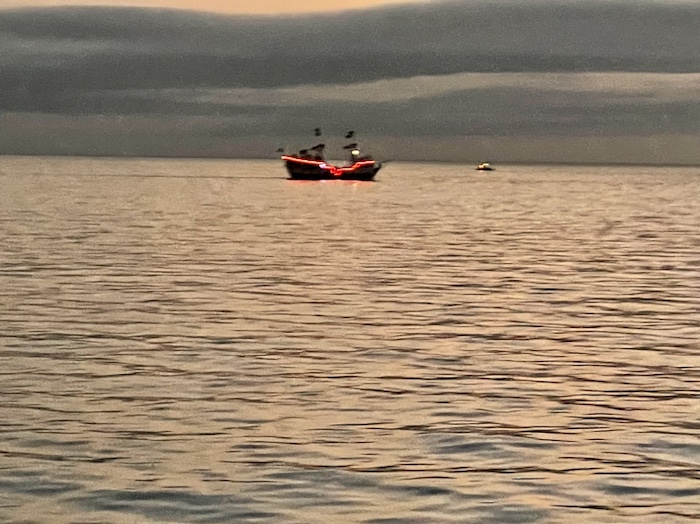
Sanibel in January, 2022


Sanibel Island, and the causeway that led to it.

Hurricane Ian hit it, and the causeway currently no longer connects the Island to Florida

It’s sad, and I’m so glad I was able to visit the island in January through attending a Sales meeting with my husband.

We took a ride to the island two different times, to a couple of restaurants and some shops we really enjoyed.

Thinking of all of the residents, the tourists and the shop owners as they begin reconstruction

PodCast: Parke Counseling

Hi! I have attached a podcast that I am using from a new platform, Anchor. You can find me on Apple Podcasts under Parke Counseling, or by searching Terri Parke.

This podcast is a little bit about trauma therapy, and some evidence based treatments for it. I end by talking a little about how COVID has affected all of us, and some of the traumatic affects it has had or could have had on us as we continue to live through this pandemic.

Here’s the Link:

https://podcasts.apple.com/us/podcast/parke-counseling/id1610134167

Happy Listening!

The Mind Body Connection, Mental Health Therapy and Pilates

The Christmas holiday is complete, and the New Year’s Day holiday is not quite here. The Omicron Variant has made its appearance, and I’m over it.

Not over COVID19 the virus, or an illness, or really anything medically whatsoever.

I’m really frustrated with the number of people who continue to get sick from the coronavirus.

For now, I’m focusing on how mental health therapy, physical movement, and trauma are all interconnected. It relates to COVID, as I’ll describe a little later.

I attended a seminar in November, 2021, which occured over the course of four Wednesdays. Bessel Van Der Kolk led it, and we learned quite a bit about how our minds and bodies are connected and related to trauma from his perspective. He was pretty keen on movement being a part of the healing process.

The audience was made up primarily of therapists and psychologists. There was an opportunity to say ‘hello’ to each other for about 20 minutes before each session began, during which time I generally figured out how to connect to Zoom accurately.

I didn’t ever see someone say they had a different field of work, but I was also fairly distracted with my efforts with getting connected and my anticipation of the seminar.

There were also people attending who had experienced trauma and therapy as their point of perspective.

As a mental health therapist, I provide talk therapy, play therapy, and teenage therapy. Teen therapy isn’t actually a thing, but they are one of my preferred demographics. I also enjoy, among others, adults working to improve their relationships and sense of self, and people with attention differences.

Bessel has been in the field of trauma for most of his career, and the book includes his experiences starting with war veterans, those who have experienced trauma in other ways, and how trauma can affect us from a multiple of perspectives. It also includes some groundbreaking work about treating trauma effectively.

Bessel didn’t really focus on the COVID pandemic, but did have a few statements and opinions about it and how it may be affecting those who participate in mental health therapy.

COVID is a trauma I have identified as affecting my personal, professional, and everyday life. It will likely be studied for years to come.

The last time we had a pandemic of this magnitude was over 100 years ago.

My own experiences have been a little sporadic related to COVID. I noticed that the adults I met with while providing mental health therapy during the initial months of COVID talked mostly about their stressors and things going on with them that were from a mental health perspective, or at least that was my perception.

Teens tended to be very focused on their life changes related to Covid, isolation, and lack of structured activities. Most did not seem to mind their lack of education in the spring, but really minded the way their education had been conducted in the spring, once school re-began in a more planned, online format the next fall.

The age of electronics affected isolation experiences, work-life balance, school and childcare experiences, and pretty much anything else I can think of.

Many people are talking about this current COVID experience, which I’ll refer to as the Omicron variant, related to the holidays of 2021.

I recently looked back at at a text string between my friend and me.

She’s in the medical field, and works in academia.

We were texting for quite a while. I was waiting for a person who had the option of meeting by Telehealth, and she must have had some available time.

She’s trained as a medical doctor (MD) and teaches classes and co-chairs the admissions committee at a medical school.

She was speaking from a medical point of view, and was expressing her concerns about hospital availability, her knowledge of the vaccine which included that it was related to the mRNA string of DNA, and we were wondering what effects this pandemic could have.

We talked about how she wished her son had the option of dropping off pizza at the door of places, at the pizza place where he had the potential of working.

We wondered if some of the bigger arenas for playing basketball would be shutting down, or allowing fewer people in.

We talked about how Telehealth and FaceTime meet some of those all important emotional needs we have, and wished more people would try it.

My son is in the field of IT, and was finishing his senior year of college. When she spoke of Zoom, I mentioned that Luke was using it and found it to be a pretty good alternative to face to face meetings.

Really, as I read back the other day, I really couldn’t believe how many of the things we talked about came to fruition, as well as how unaware we were of just how long these effects will last.

She is kind of like a computer. Her ability to remember information that she reads is really amazing, and she has an interest in all things medical as well as developments in the field.

She spoke of how long the vaccine for the cold virus has been studied, and that our bodies have certain immunities to it that had slowed when it was introduced. Because COVID-19 was something none of us had antibodies for, it was more deadly, but also allowed the vaccine to be completed fairly quickly.

It was really interesting to think about how that conversation and our reality have coincided.

One of the things that I did when I moved to Texas in 2019 was join Club Pilates. At that time, my childhood friend was an instructor for one close to my house, and it was a great way for me to strengthen myself, get to see her, and have something to do as I worked to gain some clients in my therapy practice.

Fast forward 2 years, and I attended a seminar where one of the focuses was how much intentional movement, like Yoga, Pilates, or something like that, helps with mental health, especially when combined with talk therapy.

I have increased to doing 3 Pilates classes a week, and am much stronger than when I began classes in July of 2019

At that time, I was experiencing quite a bit of back pain. I fell from my bike in April of 2020, and re-Injured my left ankle, which has never been my best ligament. I also have some. chronic shoulder pain, from being dislocated multiple times, starting at the age of 5.

Through mental health therapy, physical therapy, Pilates, and multiple other social supports, I have been able to work toward and be healthier during the time of this pandemic.

I have been able to continue to see people, both in person and through Telehealth, for therapy at the group practice I joined just prior to the pandemic in 2020.

As we all experience daily ups and downs, and have feelings about our family interactions, our work life environments, and our down time, how do you help yourself remain strong mentally and physically?

How will we look back on this multi-year trauma, and work to regain a new normal, in years and generations to come?

What have you found to be helpful in setting your fears aside, and being productive at what you are working toward?

What social and emotional supports are helpful to you, and what have you found to be things you don’t want to reintegrate?

Having some friends from my high school living near me has been infinitely helpful as I have learned to live in a new state with different cultures and traffic patterns.

Using Zoom to participate in a monthly movie club with my former youth pastor, and the womens group she has led for 25 years has been one of the high points of my Monday nights.

Having a strong family support, from my husband, my twin sons, my parents, and my siblings has been something I don’t know what I would have done without.

And our dog Mosby certainly did not hurt.

I heard this Omicron variant may be very contagious but less deadly, particularly for those who are vaccinated. I have heard it may peak in a few weeks, and then drop off.

I hope and wait for the day I’m writing about how this pandemic affected us in the past tense, with restrictions a thing of the past.

It’s a nice sunny January day here as I write. Hope there’s something sunny and bright going on with you as well.